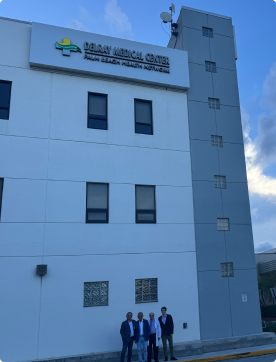
Your Family Member Has a Serious Wound at Delray Medical Center.
You are already at a Level I trauma hospital. Ask whether the reconstructive wound team has looked at it.
Not every wound needs a plastic surgeon. But a serious wound deserves early reconstructive review — especially when surgeons who publish, teach, and present nationally and internationally on complex wound care are available at this hospital.
Delray Medical Center is a Level I trauma center. Level I trauma centers provide the highest level of trauma care available in Florida. That should reassure families.
It should also focus the question.
Patients are at Delray Medical Center because they need higher-level hospital resources. If your family member is already here with a serious wound, the next question is reasonable: Has Plastic Surgery Trauma Associates reviewed the wound from a reconstructive standpoint?
You do not need to argue. You do not need to accuse anyone. You can ask clearly and respectfully:
Since we are already at a Level I trauma center, can we ask whether Plastic Surgery Trauma Associates should evaluate this wound?
Delray Is Where Complex Cases Come. Use the Full Strength of the System.
A trauma center is built for serious problems. It brings together emergency care, trauma surgery, specialists, nurses, critical care, rehabilitation, and hospital resources around patients who need a higher level of care.
That is the point.
When a wound is simple, routine wound care may be enough. But when a wound is serious, deep, worsening, traumatic, postoperative, fragile-skin related, near hardware, or not improving, families can ask whether the wound is using the full strength of the Level I trauma environment.
If Delray is the higher-level hospital, PSTA is the higher-level wound question.
Plastic Surgery Trauma Associates works within the Delray Medical Center environment to evaluate serious wounds, soft-tissue trauma, exposed structures, hardware risk, postoperative breakdown, fragile-skin injuries, and other reconstructive problems.
The point is not to question the hospital. The point is to use the hospital’s highest-level resources when the wound requires them.
Why Ask Early — or Ask Again?
Some wounds are routine. Some are not.
A serious hospital wound can involve tissue viability, exposed tendon, exposed bone, exposed hardware, fragile skin, infection risk, dead space, pressure, shear, poor perfusion, postoperative breakdown, or failed closure.
When those issues are present, the question is not just:
“What dressing goes on the wound?”
The better question is:
Has the full reconstructive picture been considered — by a specialist trained to see all of it?
If a wound plan already exists and you are uncertain whether it addresses soft-tissue reconstruction, tissue viability, or closure strategy, asking for reconstructive review is appropriate.
Plastic Surgery Trauma Associates brings soft-tissue and reconstructive judgment to wounds that may need more than bedside wound care. That does not mean every wound needs surgery. It means serious wounds should be evaluated early enough that the right level of care can be chosen before options narrow.
Care From Surgeons Who Study, Publish, and Teach Complex Wounds
Plastic Surgery Trauma Associates is not generic wound care.
PSTA is a hospital-based reconstructive plastic surgery service involved in complex wounds, soft-tissue trauma, fragile-skin injuries, exposed hardware, postoperative wound breakdown, limb salvage, spine soft-tissue coverage, burn reconstruction, and related reconstructive problems within the Delray Medical Center environment.
The surgeons involved in this work have published, lectured nationally, and presented internationally on wound care, soft-tissue reconstruction, tissue perfusion, geriatric skin tears, limb salvage, spinoplastics, and advanced reconstructive techniques.
That matters because complex wounds are not solved by dressing choice alone. They require judgment about:
- tissue viability
- timing
- closure strategy
- grafting options
- flap coverage
- exposed structures
- dead space management
- infection risk
- whether the wound is following a safe path
- whether the current plan reflects the full reconstructive picture
If surgeons with this level of wound and reconstructive experience are available at this hospital, should they evaluate the wound?
Is Someone Actually Planning This Wound?
When a family member is in the hospital with a serious wound, the care team is usually doing something.
Someone may be changing dressings. Someone may be monitoring the wound. Someone may be checking for infection. Someone may be documenting progress.
But there is a different question families should ask:
Is anyone building a soft-tissue strategy for this wound?
There is a difference between a wound being watched and a wound having a reconstructive plan.
A reconstructive plan asks:
- Is the tissue alive enough to heal?
- Is there exposed tendon, bone, hardware, implant material, sternum, or spine instrumentation?
- Is there dead space?
- Is there infection risk?
- Can this close safely on its own?
- Does this need debridement, grafting, flap coverage, or staged reconstruction?
- Has the full reconstructive ladder been considered?
- Has the current plan been reviewed by a reconstructive specialist?
For routine wounds, dressings and monitoring may be enough.
For complex wounds, these questions may require a physician trained specifically in soft-tissue reconstruction. If those questions have not been asked — or if the answers are unclear — reconstructive review is appropriate.
Use This Bedside Script
Choose the version that fits your situation. All are appropriate. None imply accusation.
Soft — Opening the conversation:
“We appreciate everything the team is doing. Because this wound seems serious, can we ask whether plastic surgery should evaluate it?”
Clear — Requesting initial consultation:
“Given what we are seeing with this wound, we would like to know whether Plastic Surgery Trauma Associates has reviewed the soft-tissue and closure options — or whether a consultation should be placed.”
Firm — When reconstruction has not been addressed:
“We are not questioning the team’s effort. We want to make sure this wound has been evaluated from a reconstructive standpoint by a specialist trained in soft-tissue reconstruction.”
Plan review — When a wound plan exists:
“We appreciate the current wound plan. Can Plastic Surgery Trauma Associates review whether the reconstructive options have been fully considered?”
Level I trauma framing — Using the hospital’s own standard:
“Since we are already at a Level I trauma center, can we ask whether the reconstructive wound team should evaluate this wound?”
Escalated but polite — When time has passed without action:
“Before more time passes, we would be more comfortable if Plastic Surgery Trauma Associates assessed whether there are reconstructive options that should be part of the wound plan. Can that consultation be placed today?”
Managed Is Not the Same as Reconstructed
A wound can be cleaned, dressed, monitored, and documented — and still lack a reconstructive plan.
Routine wound care asks how to protect the wound. Reconstructive wound care asks what the wound needs to close durably. Both matter. But they are not the same.
In the hospital, wounds may be managed by the primary medical team, general surgery, trauma surgery, wound care nursing, or another service. That may be appropriate for many wounds.
But when the wound involves exposed tendon, exposed bone, exposed hardware, fragile elderly skin, traumatic tissue loss, postoperative breakdown, dead space, poor tissue viability, or repeated failure to improve, the wound may have crossed into reconstructive territory.
That does not mean anyone has done anything wrong. It means the wound may need a specialist trained to evaluate the full reconstructive ladder.
Plastic surgery consultation does not commit the patient to surgery. It answers a critical question: Is routine wound care enough, or does this wound need a reconstructive plan?
If a plan already exists, reconstructive review answers a second question:
Is the current plan the right plan — and does it reflect the full reconstructive picture?
At a Level I trauma center, families are entitled to ask both.
Why Plastic Surgery May Matter for Hospital Wounds
Plastic surgeons are trained in soft-tissue reconstruction. That does not mean every wound needs an operation. It means the wound can be evaluated across the full reconstructive ladder.
Sometimes the right answer is continued wound care. Sometimes it is debridement. Sometimes it is delayed closure. Sometimes it is a skin graft. Sometimes it is local tissue rearrangement. Sometimes it is muscle flap coverage. Sometimes it is microsurgical tissue transfer.
Sometimes the issue is not closure alone. It may be tissue viability, exposed hardware, tendon coverage, dead space, perfusion, fragile skin, infection risk, or preservation of function.
The value of plastic surgery is not choosing the biggest operation. The value is knowing what level of reconstruction the wound actually needs — and whether the plan in place reflects that judgment.
Appropriate Care May Still Need Reconstructive Input
General surgeons and trauma surgeons often provide excellent wound care within their scope. Hospitalists and internists coordinate the broader medical picture. Wound care nurses help monitor wounds, guide dressings, reduce pressure injury risk, and support continuity. Those roles matter.
But when the wound problem becomes soft-tissue viability, exposed structures, durable closure, hardware protection, flap selection, graft survival, dead-space control, or staged reconstruction, the patient may benefit from the specialty trained specifically in reconstructive wound planning.
This is not about criticizing the care already being provided. It is about asking whether the wound has been reviewed through the correct lens.
Every specialty brings a perspective. Plastic surgery brings the reconstructive map.
Direct Reconstructive Review Matters
In teaching hospitals, trainees and nursing teams play important roles in gathering information, monitoring wounds, and communicating findings to supervising physicians. That is normal hospital care.
But when a wound is complex, families may ask whether the attending surgeon with reconstructive expertise has directly reviewed the wound and the plan.
A serious wound should not depend only on observation, dressing changes, or secondhand description when reconstructive options may be relevant.
Families can ask:
Has Plastic Surgery Trauma Associates directly evaluated this wound — and if a plan is already in place, has PSTA reviewed whether it fully addresses soft-tissue reconstruction?
At a Level I trauma center, the full depth of specialist resources is available. Asking whether that depth is being applied to the wound is appropriate.
When to Ask for Plastic Surgery Input
Ask whether Plastic Surgery Trauma Associates should evaluate the wound — or review the current plan — if there is:
- exposed tendon
- exposed bone
- exposed orthopedic hardware
- exposed implant material
- exposed spine instrumentation
- sternal or chest wound breakdown after cardiac surgery
- postoperative wound opening or dehiscence
- fragile elderly skin with avulsion or skin tear injury
- black, dusky, or dying tissue
- traumatic tissue loss
- wound infection with soft-tissue loss
- deep dead space or cavitating wounds
- wounds that are not improving despite appropriate care
- repeated wound failure
- wounds near vascular bypass grafts, shunts, or synthetic material
- concern that the wound may delay discharge or recovery
- a wound plan that has not been reviewed by a reconstructive specialist
- uncertainty about whether the current wound plan addresses closure, reconstruction, or tissue viability
Hardware exposure and postoperative wound failure are structural problems. They may require structural solutions — not just surface management.
Common Inpatient Wounds PSTA May Evaluate
Exposed Hardware
When plates, screws, rods, joint implants, spine instrumentation, or fixation devices are exposed or threatened, the wound is no longer just a skin problem. It may require a plan for tissue viability, infection risk, dead space, hardware preservation, vascularized coverage, closure timing, and coordination with the original surgical service.
“Has a reconstructive plastic surgeon evaluated whether durable soft-tissue coverage is needed?”
Postoperative Wound Breakdown
A surgical incision that opens after an operation may reflect poor perfusion, infection, tension, dead space, fragile tissue, exposed structures, or hardware risk. Dressings may manage the surface. They may not address the cause.
“Is the wound being managed, or is there a plan to close it durably?”
Elderly Skin Tears and Avulsion Wounds
In older patients, wounds can look deceptively minor at first. Fragile skin, anticoagulation, hematoma, and reduced tissue elasticity can lead to progressive tissue loss.
“Is this a simple skin tear, or is this a reconstructive tissue-salvage problem?”
Spine and Instrumentation Wounds
When soft tissue breaks down over spine hardware, the wound may threaten the deeper reconstruction. Durable repair may require coordination between plastic surgery and spine surgery.
“Has the wound been evaluated by plastic surgery and spine surgery together?”
Sternal and Chest Wound Breakdown
A chest wound after cardiac surgery can involve more than skin. Sternal instability, infected bone, exposed wires, exposed hardware, and proximity to the mediastinum may require reconstructive evaluation beyond wound dressings.
“Is this superficial wound care, or does this require structural chest wall reconstruction?”
Traumatic Tissue Loss
Traumatic wounds with soft-tissue loss may involve exposed bone, tendon, nerves, vessels, or hardware. These wounds may require staged reconstruction rather than dressing care alone.
“Has the full reconstructive strategy been mapped for this injury?”
Wounds With a Plan That Has Not Been Reviewed by a Reconstructive Specialist
Sometimes the wound has been assessed and a plan is in place — but that plan was developed without direct reconstructive plastic surgery input. Families may ask whether that plan has been reviewed by a specialist trained across the full reconstructive ladder.
“Can Plastic Surgery Trauma Associates review whether the reconstructive options have been fully considered?”
How PSTA Works With the Hospital Team
Plastic Surgery Trauma Associates does not replace the existing care team. PSTA adds reconstructive judgment when soft-tissue complexity is central to the wound.
Whether the role is initial consultation or plan review, a PSTA evaluation may help clarify:
- whether the wound is routine or structurally complex
- whether current wound care is appropriate and complete
- whether deeper structures are threatened
- whether the wound plan addresses closure, reconstruction, and tissue viability
- whether surgery is needed — or not needed
- whether wound care nursing should continue under a formal reconstructive plan
- whether orthopedics, spine surgery, cardiothoracic surgery, vascular surgery, infectious disease, or the primary team should remain involved
The goal is coordinated care. Not conflict. And within a Level I trauma environment, that coordination includes access to the full reconstructive team.
What Happens After Consultation?
A plastic surgery consultation does not automatically mean surgery. After evaluation, PSTA may recommend:
- confirming that the current wound plan is appropriate
- continuing current wound care without changes
- coordinating wound care nursing with a formal reconstructive plan
- monitoring tissue viability over a defined period
- obtaining imaging or perfusion assessment when appropriate
- bedside or operative debridement
- delayed closure
- direct closure
- skin grafting
- local or regional flap coverage
- muscle flap reconstruction
- refining the existing wound plan based on reconstructive review
- coordination with other surgical teams
- outpatient follow-up after discharge
The purpose is not to escalate every wound. The purpose is to confirm — or improve — the plan before options narrow.
Ask Before the Wound Drifts
If your family member has a serious wound at Delray Medical Center, ask whether the wound is simply being managed — or whether it has a reconstructive plan that has been reviewed by the appropriate specialist.
You are already at the hospital where complex cases come. Ask whether the reconstructive wound team is part of the plan.
This is especially important if there is exposed tendon, exposed bone, exposed hardware, fragile elderly skin, postoperative breakdown, traumatic tissue loss, black or dying tissue, infection risk, or a wound that is not improving.
Ask whether Plastic Surgery Trauma Associates should evaluate the wound — or review the plan already in place.
For Referring Physicians and Case Managers
If you are managing a patient with a wound that may have crossed a reconstructive threshold — or where the family has requested reconstructive review of the wound plan — PSTA is available for inpatient consultation within Delray Medical Center.
Appropriate referrals may include:
- postoperative wound dehiscence with exposed deep structures or hardware
- traumatic soft-tissue loss with bone or tendon involvement
- wounds not progressing on standard wound care pathways
- geriatric avulsion or skin tear injuries with poor tissue quality
- spine, sternal, or abdominal wall wound breakdown
- wounds where the reconstructive ladder has not been formally evaluated
- cases where the family has requested reconstructive review of the wound plan
FAQ
No. Many wounds do not require plastic surgery consultation. The question is whether the wound has reached a reconstructive threshold — a point where standard wound care pathways may not be enough.
A wound may cross a reconstructive threshold when it involves exposed tendon, bone, hardware, dead tissue, poor perfusion, traumatic tissue loss, postoperative breakdown, deep dead space, fragile skin, or repeated failure to heal.
Delray Medical Center is a Level I trauma center. Level I trauma centers provide the highest level of trauma care available in Florida and bring together specialist resources for complex cases. If your family member is already at Delray with a serious wound, it is reasonable to ask whether the reconstructive wound team — available within that same environment — should be involved.
Yes. Families may ask whether a reconstructive plastic surgeon has reviewed the wound plan. That question does not challenge the care team. It helps confirm whether soft-tissue closure, reconstruction, and tissue viability have been considered. Families can ask: “Can Plastic Surgery Trauma Associates review whether the reconstructive options have been fully considered?”
Wound care nursing is important for monitoring, dressing guidance, pressure management, and continuity. For routine wounds, it may be the appropriate primary intervention. For complex wounds, it is often strongest when coordinated with a physician-led reconstructive plan.
No. Consultation is an evaluation, not a commitment to surgery. PSTA may confirm that current wound care is appropriate, or may identify a need for debridement, staged closure, grafting, flap coverage, or coordination with other surgical teams.
Plastic Surgery Trauma Associates is a hospital-based reconstructive plastic surgery service operating within the Delray Medical Center environment. The service addresses complex wound care, soft-tissue trauma, extremity reconstruction, limb salvage, spine soft-tissue coverage, burn reconstruction, and related reconstructive problems. The surgeons involved have published, lectured nationally, and presented internationally on wound care and reconstructive surgery.
Because serious wounds may benefit from evaluation by surgeons trained across the full reconstructive ladder. PSTA works within the same Level I trauma environment your family member is already in. If a wound plan exists and has not been reviewed by a reconstructive specialist, PSTA may confirm the plan is appropriate — or identify options that have not yet been considered.
For an initial consultation: “Can we ask whether Plastic Surgery Trauma Associates should evaluate this wound?” For plan review: “Can Plastic Surgery Trauma Associates review whether the reconstructive options have been fully considered?” Using the Level I framing: “Since we are already at a Level I trauma center, can we ask whether the reconstructive wound team should evaluate this wound?” All three are appropriate and do not imply criticism of the existing care team.
No. This page is for informational and educational purposes only. It does not provide medical advice, diagnosis, or treatment recommendations. Medical decisions require direct evaluation by licensed healthcare professionals.
Serious Wound at Delray Medical Center?
You are already at the higher-level hospital. Ask the higher-level wound question.
If the wound involves exposed structures, fragile skin, tissue loss, hardware, infection risk, postoperative breakdown, or failure to improve — or if a wound plan exists that has not been reviewed by a reconstructive specialist — ask the care team:
“Has Plastic Surgery Trauma Associates been consulted?”
Delray Medical Center is where complex cases come. PSTA is the reconstructive team families should ask about when the wound itself is complex.